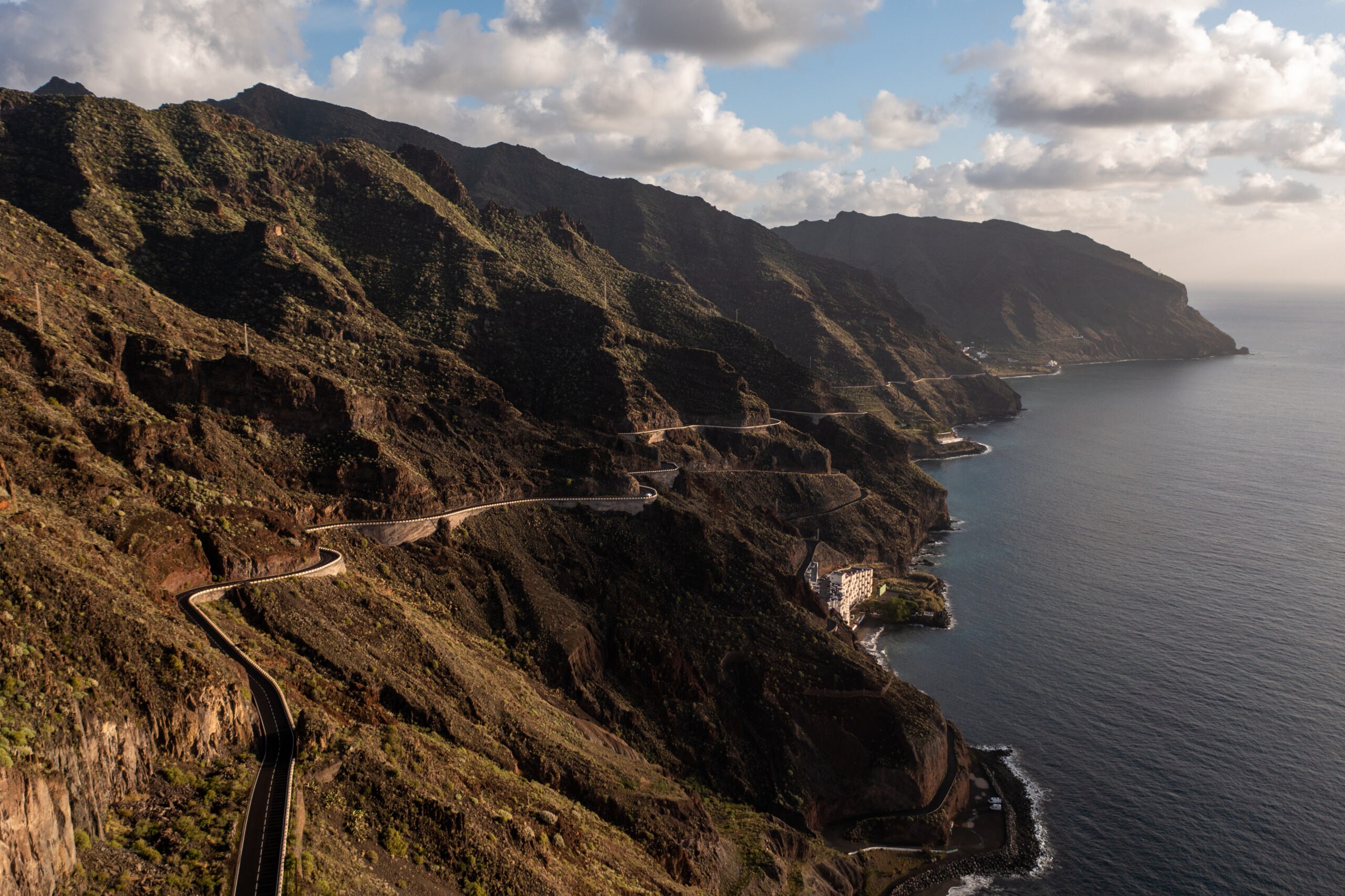
Tenerife weather month by month — why the island works all year round
Temperatures, sea conditions, the calima and the difference between the north and the south. A month-by-month breakdown and an answer to the question of when to visit Tenerife.
Tenerife is marketed as the island of eternal spring, and for once the slogan is close to the truth. The island sits at the same latitude as the Sahara, but the Canary Current and the trade winds keep it cool, so summers are not scorching and winters are not winters in any northern European sense. The result: there is no single best month — just several versions of the same island.
Why one island has two climates
The most important thing to understand before you arrive: the north and the south of Tenerife are two different weather worlds. Humid trade winds arrive from the north-east, hit the Anaga massif and the slopes of Teide, and leave their clouds and rain there. The south, sheltered by the mountain, gets far more sun and far less rain.
In practice this means it can be 20°C and overcast in Puerto de la Cruz while, forty minutes away in Costa Adeje, it is 26°C and cloudless. This is why you should never check the weather "for Tenerife", only for a specific town — and why a car matters so much here: if it is raining in the north, you simply drive to the other side.
Then there is a third factor: altitude. Temperature drops roughly 6°C for every 1,000 metres. With 25°C on the coast, it can be close to freezing with snow on the ground at the upper cable car station on Teide. That is not trivia — it is the reason so many visitors end up shivering in flip-flops.
Month by month
Approximate values for the south of the island. In the north, subtract 2-3°C and expect more cloudy days.
| Month | Day | Night | Sea | What to expect |
|---|---|---|---|---|
| January | 21-22°C | 15°C | approx. 19-20°C | Peak winter season, plenty of sun in the south |
| February | 21-22°C | 15°C | approx. 19°C | Santa Cruz carnival, almond trees in blossom |
| March | 22-23°C | 15°C | approx. 19°C | Excellent month for hiking |
| April | 23°C | 16°C | approx. 19-20°C | Anaga at its greenest, comfortable temperatures |
| May | 24°C | 17°C | approx. 20°C | Fewer tourists, stable weather |
| June | 25-26°C | 18°C | approx. 21°C | Start of summer, long days |
| July | 27-28°C | 20°C | approx. 22°C | Warm and windy, strong trade winds |
| August | 28-29°C | 21°C | approx. 23°C | Warmest month, calima possible |
| September | 27-28°C | 21°C | approx. 23-24°C | Warmest sea of the year |
| October | 26°C | 20°C | approx. 23°C | Warm and quieter — a very good compromise |
| November | 24°C | 18°C | approx. 22°C | First rains in the north |
| December | 22°C | 16°C | approx. 20-21°C | Christmas at 20°C, season in full swing |
Winter: a full season in its own right
December, January and February are high season on Tenerife — not because the weather is merely tolerable, but because you can genuinely spend the day on a beach in the south. Days are shorter and the ocean cooler, but daytime temperatures rarely drop below 20°C. It is also the best time for sightseeing: no heat to fight on the trails, and Teide occasionally dusted with snow, which produces the most striking photographs of the year.
February brings the Santa Cruz carnival, one of the largest in the world. If you are travelling then, book accommodation and a car far in advance — availability drops sharply.
Summer: warm, but not punishing
July and August are the warmest months, but the trade winds keep the heat manageable — a typical 28-29°C day is far more bearable than August on the Spanish mainland. The ocean is at its warmest, and the north of the island is at its most pleasant, since even there the sun dominates.
One thing worth knowing about is the calima: a mass of hot Saharan air carrying fine dust. It occurs several times a year, most often in late summer and early autumn. For a day or two the temperature can jump by 8-10°C, the sky turns milky and visibility drops. It is no reason to cancel a trip, but if you have respiratory problems, take it easy outdoors while it lasts.
When to come, depending on what you want
- Beach and swimming: August to October, when the water is warmest.
- Hiking and mountains: March to May and October to November — moderate temperatures and good visibility.
- Escaping winter: December to February, especially in the south.
- Fewer people, lower prices: May to June and the first half of November.
- Whale watching: all year round — pilot whales and dolphins are resident, though calmer seas make spring and summer trips easier.
What to pack, whatever the month
The rule is simple: dress in layers. Even in midsummer a day can look like this — 24°C in Los Cristianos in the morning, 5°C and windy at the Teide cable car at noon, 21°C over dinner. A light jacket, a fleece and proper shoes take up almost no space and decide whether a mountain trip is enjoyable. Add high-factor sun cream year round: this is Saharan latitude, and the sun is stronger than the thermometer suggests.
The conclusion: there is no bad time to visit
There are only different versions of the island. People come in winter for sun they cannot get at home, in summer for a warm ocean, and in spring and autumn for the mountains and the quiet. The one thing genuinely worth planning is how you will get around — with differences this sharp between north and south, your own car is the simplest way to always be on whichever side of the island the sun happens to be shining.
See also: what to see in Tenerife and our car rental guide.
Planning a trip to Tenerife?
Browse our fleet — over 50 cars from economy to premium, delivered to Tenerife South (TFS) airport. No credit card required, free cancellation up to 3 days before pick-up.
See cars and prices