What to see in Tenerife — a guide to the best places on the island
Teide, Masca, Anaga, Los Gigantes, Garachico and the black beaches of the north. A practical guide to the places that make the strongest impression on Tenerife — including how to get there and how long to allow.
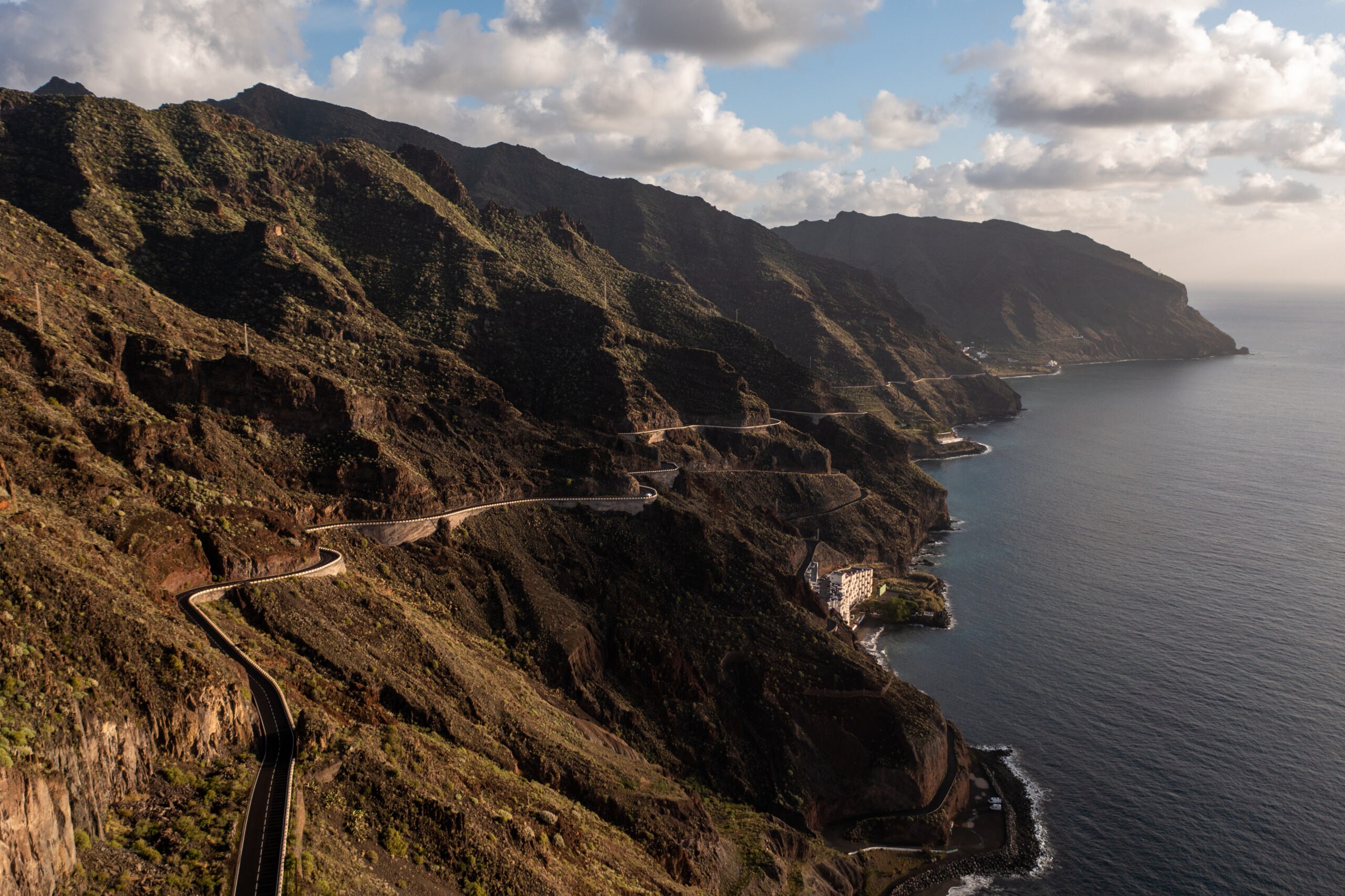
Tenerife is the largest of the Canary Islands and easily the most varied. In a single day you can drive from a volcanic desert at 2,000 metres into a laurel forest wrapped in mist, then come down to a black-sand beach and swim in the Atlantic. Below are the places that impress us most — with practical notes, because you will need your own car to reach most of them.
Teide National Park — the heart of the island
At 3,715 metres, Teide is the highest peak in Spain. The drive up is an attraction in itself: the road climbs in switchbacks through pine forest, and once you pass the cloud line the landscape turns into a lunar caldera covered in frozen lava. Stop at Roques de García and the Llano de Ucanca viewpoint — the most recognisable views in the park.
A cable car takes you to roughly 3,555 metres. Note that the final stretch to the crater rim of Pico del Teide requires a free permit booked well in advance through the Spanish national parks website. Without it you can still walk two side trails from the upper station.
Practical note: it is cold up there all year — often 15-20°C below the coast, and colder still in the wind. A fleece and a jacket are not overkill, even in July. It is also worth staying after dark; the park is one of the best stargazing spots in Europe.
Masca and the Teno massif
Masca is a handful of houses perched on a ridge between ravines, reachable only on foot until relatively recently. The TF-436 road that leads there is narrow and winding and demands attention, but it is one of the most beautiful drives on the island. Take it slowly, use the passing places, and do not attempt it at the last minute before sunset.
Hiking the Masca gorge down to the ocean is possible, but requires a booking, a helmet and reasonable fitness. If trekking is not on your list, the village and the viewpoints along the way are rewarding enough on their own.
Anaga Rural Park — the green, wild north
Anaga is the oldest part of the island and a UNESCO Biosphere Reserve. It is covered in laurisilva, a humid laurel forest that survives almost nowhere else in Europe outside Macaronesia. The climate here is nothing like the south: cooler, wetter, frequently inside the cloud.
Start with the Sendero de los Sentidos trail near the Cruz del Carmen visitor centre (short and well marked), then drive down to Taganana and Benijo — black beaches with rock formations rising out of the water, and some of the most photogenic scenery on Tenerife.
Los Gigantes — cliffs over the ocean
Here the cliff wall drops vertically into the Atlantic, in places from several hundred metres. The view from the town terrace is good, but the scale only registers from the water — boats leave from the local marina and often combine the trip with whale watching. The channel between Tenerife and La Gomera is one of the few places in the world where pilot whales and bottlenose dolphins are present year round.
Garachico and Icod de los Vinos
Garachico was the island's main port until the 1706 eruption buried it in lava. What remains is an unusually atmospheric little town and El Caletón — natural pools carved out by the cooled lava, perfect for a swim when the ocean is calm.
A short drive away, Icod de los Vinos is home to the Drago Milenario, a huge dragon tree estimated to be several hundred to a thousand years old. The two towns combine naturally into one route along the north coast.
La Laguna and Santa Cruz
San Cristóbal de La Laguna is the island's former capital and its historic centre is a UNESCO World Heritage Site — its grid of streets later served as a template for colonial towns across Latin America. Santa Cruz, the administrative capital, offers Calatrava's Auditorio de Tenerife, the Mercado Nuestra Señora de África and Las Teresitas beach with its imported pale sand.
The south: beaches, water park and El Médano
Costa Adeje, Playa de las Américas and Los Cristianos are where most visitors stay — the sunniest part of the island, with the highest concentration of restaurants and hotels. Siam Park in Costa Adeje is regularly ranked among the best water parks in the world. If you prefer nature to attractions, head to El Médano, where near-constant wind has made it the island's windsurfing and kitesurfing capital, and where Montaña Roja offers a short walk with an excellent panorama.
Punta de Teno — the far west
A lighthouse on a rocky headland, facing the Los Gigantes cliffs from the opposite side. Important: during the day, access along the TF-445 is restricted for private cars — you take a shuttle bus from Buenavista del Norte or drive in outside the restricted hours. Check the current rules before you set off, as they are adjusted from time to time.
How much time to allow
A week is a sensible minimum for seeing the island without rushing. A workable split: one day for Teide, one for the north (Anaga, La Laguna), one for the north-west coast (Garachico, Icod), one for Teno and Masca, and the rest for beaches and rest. Distances are short — the motorway from south to north takes about an hour — but mountain roads eat time, so do not plan three stops a day on opposite sides of the island.
Why a car changes everything here
Public transport on Tenerife works, but it sticks to the main routes. Masca, Anaga, the viewpoints in Teide National Park and the beaches at Benijo are hard or impossible to reach by bus, and organised tours give you fifteen minutes at each stop. A car lets you leave at six in the morning to be above the clouds, and come back after sunset — which is exactly when the island looks its best.
If you are planning a trip, take a look at our fleet and prices or message us through the contact form. It is also worth reading our guide to renting and driving on Tenerife and our month-by-month weather breakdown.
Planning a trip to Tenerife?
Browse our fleet — over 50 cars from economy to premium, delivered to Tenerife South (TFS) airport. No credit card required, free cancellation up to 3 days before pick-up.
See cars and prices